
Sleep Anxiety: Why You Can't Switch Off at Night | PsyConnect
Can't stop your mind racing at bedtime? A psychiatrist breaks down why anxiety spikes at night — and how to calm it before sleep.
SLEEPANXIETY
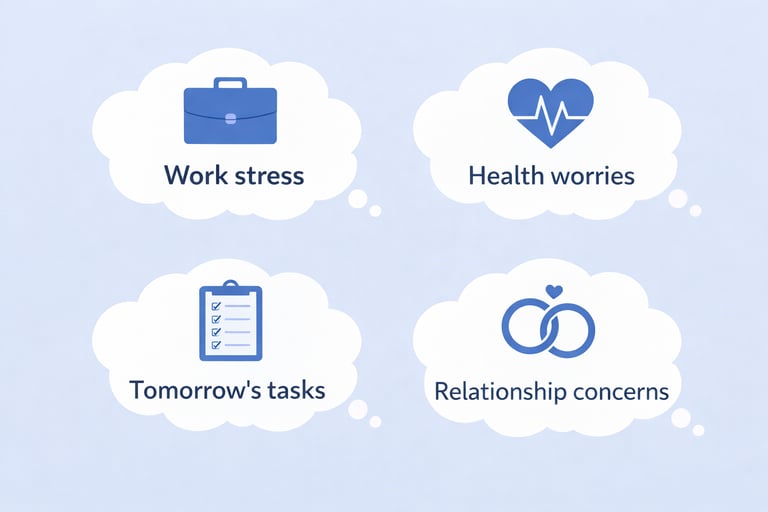
Many people notice that their mind becomes unusually active at night. Thoughts about work, relationships, health, or the next day’s responsibilities may begin to race just as the body is trying to fall asleep. This experience is often described as sleep anxiety.
Sleep anxiety refers to heightened mental or physical arousal at bedtime that interferes with the ability to fall asleep or stay asleep. While occasional difficulty sleeping during stressful periods is common, persistent anxiety around sleep can gradually contribute to chronic insomnia.
Understanding why anxiety interferes with sleep can help identify strategies to restore healthier sleep patterns.
What Is Sleep Anxiety?
Sleep anxiety occurs when worry, anticipatory stress, or heightened alertness makes it difficult to fall asleep.
People experiencing sleep anxiety often report:
racing thoughts at bedtime
excessive worry about not being able to sleep
increased heart rate or physical tension at night
difficulty “switching off” mentally
feeling alert despite physical fatigue
In many cases, the individual may begin to anticipate sleep difficulties, which further increases anxiety around bedtime.
Why Anxiety Interferes With Sleep?
Sleep requires the body and brain to gradually shift from a state of alertness to a state of relaxation. Anxiety activates the opposite biological response.
When the brain perceives stress or threat, the sympathetic nervous system becomes activated. This triggers the release of stress hormones such as cortisol and adrenaline, increasing alertness and vigilance.
These physiological changes can interfere with sleep in several ways:
increased heart rate
muscle tension
heightened mental activity
difficulty relaxing
From a biological perspective, the brain remains in a state of hyperarousal, making it harder to transition into sleep.
Common Triggers of Sleep Anxiety
Sleep anxiety can develop for many different reasons. Some of the most common triggers include:
Stress and Life Events
Periods of stress—such as work pressure, examinations, relationship difficulties, or financial concerns—can increase nighttime rumination.
Mental Health Conditions
Sleep disturbance frequently occurs in conditions such as:
generalized anxiety disorder
depression
post-traumatic stress disorder
Fear of Not Sleeping
Some individuals begin to worry excessively about the consequences of poor sleep. This performance anxiety around sleep can unintentionally maintain insomnia.
Irregular Sleep Habits
Irregular sleep schedules, excessive screen use at night, and inconsistent bedtime routines can make it harder for the brain to transition into sleep.
Signs That Anxiety Is Affecting Your Sleep
Sleep anxiety may be present if you notice:
difficulty falling asleep due to racing thoughts
feeling mentally alert when lying in bed
checking the clock repeatedly at night
worrying about how little sleep you will get
feeling anxious when bedtime approaches
Over time, this pattern can create a cycle of anxiety and insomnia.
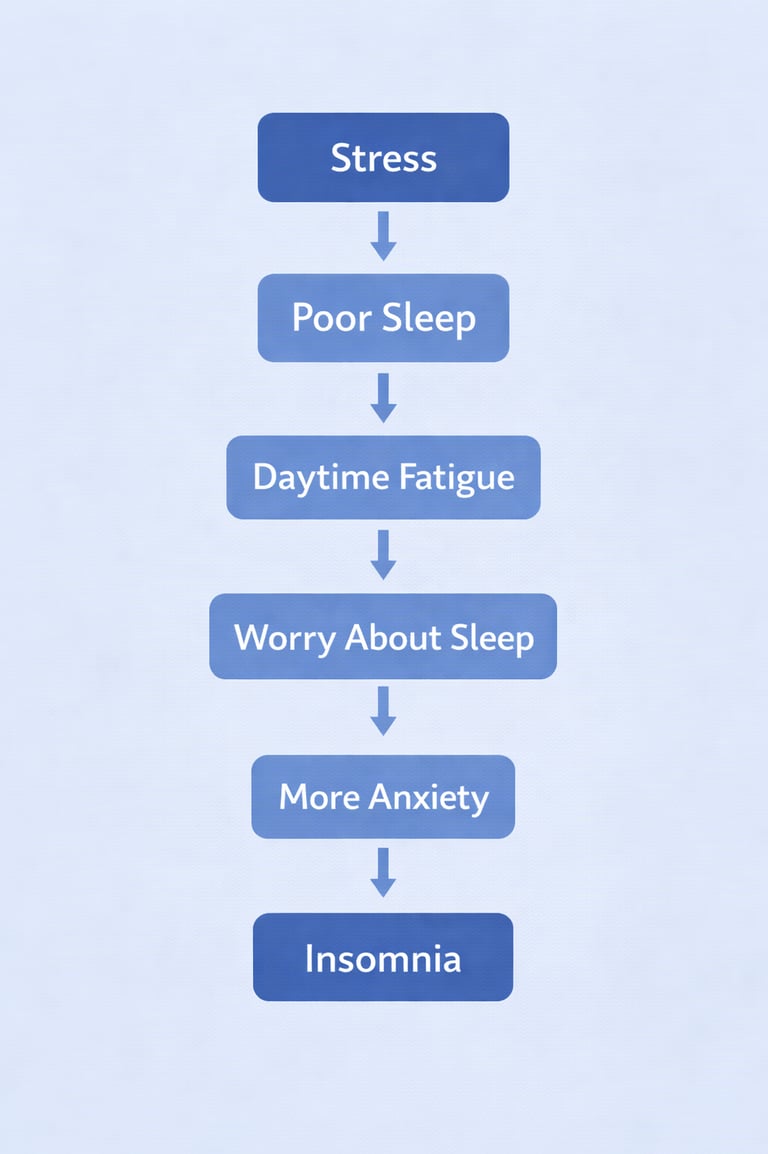
The Cycle of Anxiety and Insomnia
Sleep anxiety often develops through a self-reinforcing cycle:
Stress or anxiety interferes with sleep.
Poor sleep increases fatigue and irritability the next day.
Worry about sleep increases before bedtime.
Anxiety makes it even harder to fall asleep.
Breaking this cycle often requires addressing both anxiety and sleep habits.
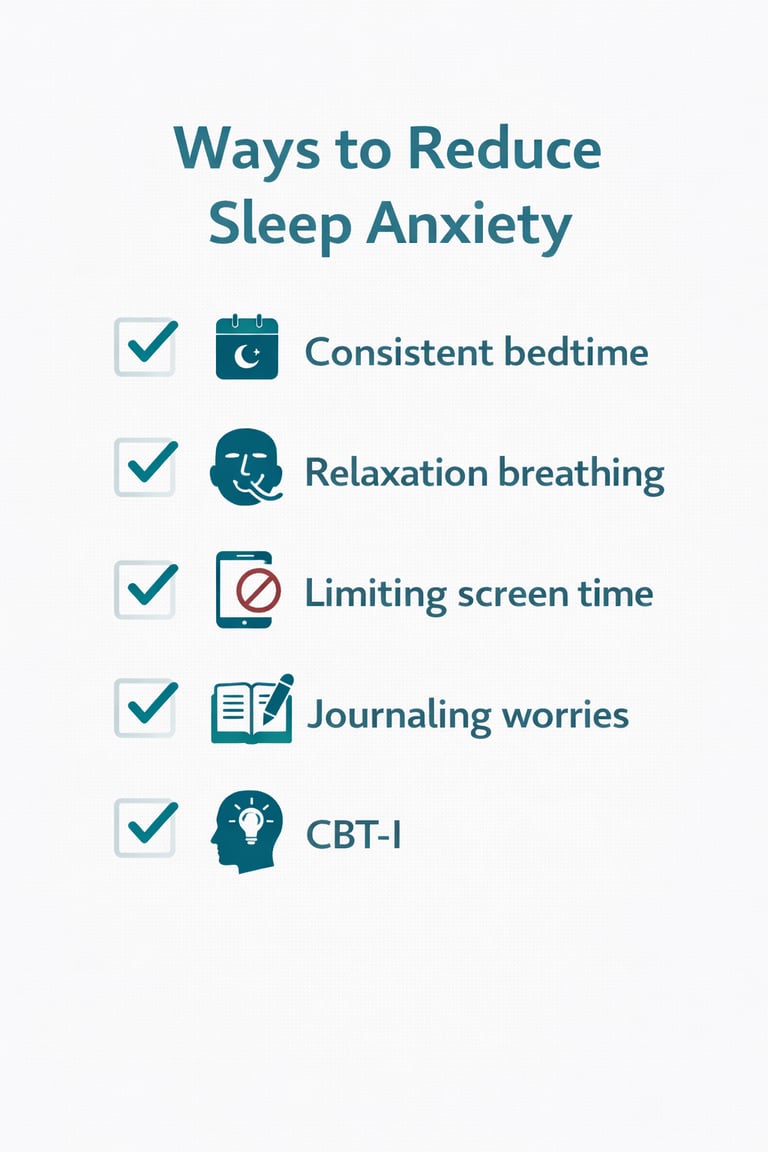
Strategies That Can Help Reduce Sleep Anxiety
Several approaches can help reduce bedtime anxiety and improve sleep.
Establish a Consistent Sleep Routine
Going to bed and waking up at the same time each day helps regulate the body’s internal clock.
A predictable routine can signal to the brain that it is time to transition toward sleep.
Reduce Mental Stimulation Before Bedtime
Activities that activate the mind—such as work, intense conversations, or social media—may increase mental alertness at night.
Many people find it helpful to create a 30–60 minute wind-down period before sleep.
Manage Racing Thoughts
Some individuals find it useful to write down worries or next-day tasks earlier in the evening. This technique, sometimes called constructive worry, can reduce rumination at bedtime.
Relaxation strategies such as deep breathing, mindfulness, or progressive muscle relaxation may also help calm the mind.
Limit Clock-Watching
Repeatedly checking the time during the night can increase frustration and anxiety about sleep. Turning the clock away from view may help reduce this tendency.
Cognitive Behavioural Therapy for Insomnia (CBT-I)
CBT-I is considered the most effective treatment for chronic insomnia. It addresses the behaviours and thought patterns that maintain sleep difficulties and can also help reduce anxiety around sleep.
When to Seek Professional Help
Occasional sleep difficulty during stressful periods is common. However, professional evaluation may be helpful if:
sleep problems persist for several weeks or longer
daytime functioning is significantly affected
anxiety about sleep becomes persistent
sleep difficulties occur alongside symptoms of anxiety or depression
A structured assessment can help identify contributing factors and guide appropriate treatment.
Self-Assessment
If you frequently experience racing thoughts at night or difficulty falling asleep because of worry, a brief self-assessment may help you understand whether anxiety or insomnia could be contributing to your sleep difficulties.
Reviewed by Dr. Mahendra Singh Uikey, MBBS, MD Psychiatry (AIIMS Delhi)
Consultant Psychiatrist | AIIMS-trained
Providing evidence-based psychiatric care
This article is for educational purposes and does not replace professional medical advice.
Contact
Reach out for support and appointments
care@psyconnect.in
©2026. All rights reserved.
Confidential. Evidence-based. Ethical psychiatric practice.
If you are in crisis or having thoughts of self-harm or suicide, please reach out right away. Support is free, confidential, and available 24/7.
Tele-MANAS (Government of India): 14416 or 1-800-891-4416 — available in English and 20 regional languages
ICall (TISS): 9152987821 — counselling support by trained professionals
AASRA: 9820466726 — 24/7 crisis support
Emergency: Contact your nearest hospital or call 112
IMMEDIATE SUPPORT
+91 82877 12625 (Reception)