
Tired but Can't Sleep? Here's Why (and What Helps) | PsyConnect
Exhausted all day but wide awake at night? A psychiatrist explains why this happens and the steps that actually help you sleep.
SLEEP
Many people experience a frustrating situation at night: feeling physically exhausted but still unable to fall asleep. Even after a long day, the mind may remain alert, making it difficult to transition into sleep.
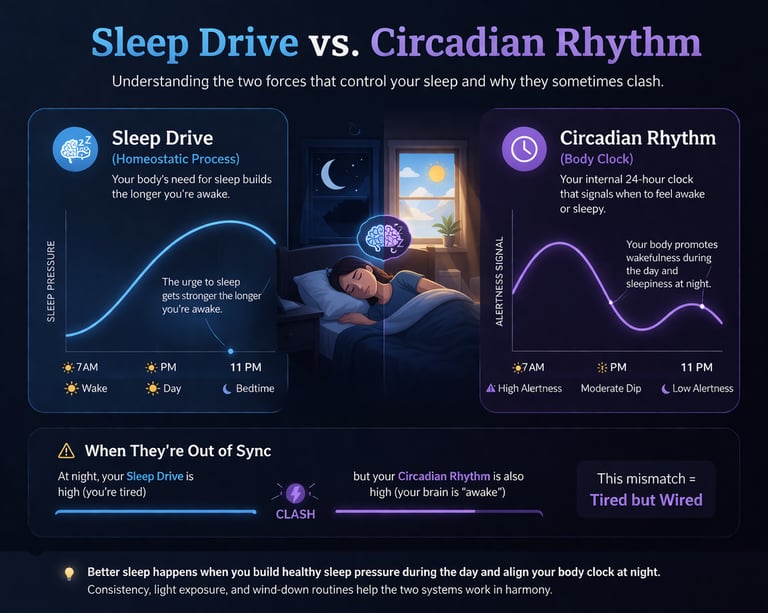
This pattern—often described as “tired but wired”—can occur when the body needs rest but the brain remains in an activated or alert state. Several factors can contribute to this experience, including stress, anxiety, irregular sleep habits, or circadian rhythm disruption.
Understanding why this happens can help identify steps that support healthier sleep patterns.
Key Points
Feeling tired but unable to sleep often occurs when the brain remains mentally alert despite physical fatigue.
Stress, anxiety, irregular sleep schedules, and late-night screen exposure are common causes.
Poor sleep habits and insomnia may also contribute to difficulty falling asleep.
Improving sleep routines and reducing nighttime stimulation can help restore natural sleep signals.
Persistent sleep difficulties may benefit from professional evaluation.
Common Reasons You Feel Tired but Cannot Sleep
Sleep depends on a balance between sleep drive (the body’s need for rest) and the brain’s arousal systems. When this balance is disrupted, falling asleep may become difficult even when someone feels tired.
Several factors may contribute to this situation.
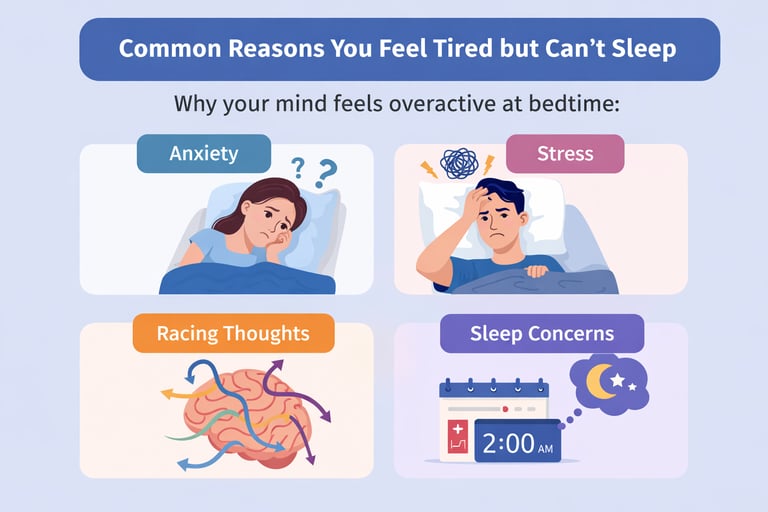
Stress and Mental Overactivity
One of the most common reasons people struggle to sleep is mental overactivity at night. Thoughts about work, relationships, health concerns, or the next day’s responsibilities can keep the brain alert.
Stress activates the body’s sympathetic nervous system, increasing alertness and releasing stress hormones such as cortisol. This can make it harder for the brain to shift into sleep mode.
Anxiety and Racing Thoughts
Anxiety can make it difficult to “switch off” mentally. People experiencing anxiety may notice:
persistent worry at bedtime
racing thoughts
difficulty relaxing
increased physical tension
These symptoms can create a cycle in which worry about sleep itself makes falling asleep even more difficult.
Irregular Sleep Schedules
Sleep timing is regulated by the body’s circadian rhythm, an internal biological clock that signals when to feel awake and when to feel sleepy.
When sleep schedules vary significantly—such as staying up late on some nights or sleeping in on weekends—the brain may struggle to produce sleep signals at the expected time.
Evening Screen Exposure
Exposure to bright screens from phones, tablets, or computers late at night can delay sleep.
Blue light emitted from screens can suppress melatonin, a hormone that helps regulate sleep timing. As a result, the brain may remain more alert even when the body feels tired.
Poor Sleep Habits
Certain habits may unintentionally interfere with sleep, including:
drinking caffeine late in the day
using the bed for work or studying
irregular bedtime routines
frequent daytime naps
Over time, these habits may weaken the brain’s association between the bed and sleep.
Insomnia
Persistent difficulty falling asleep despite feeling tired may indicate insomnia.
Insomnia can develop when sleep difficulties continue over time and become associated with frustration or anxiety about sleep.
People with insomnia may notice:
difficulty falling asleep most nights
frequent awakenings during the night
daytime fatigue or reduced concentration
What May Help Improve Sleep
Several strategies can help the brain transition more easily from wakefulness to sleep.
Maintain a Consistent Sleep Schedule
Going to bed and waking up at the same time each day helps stabilize the body’s internal clock.
Create a Wind-Down Routine
A relaxing routine before bedtime—such as reading, gentle stretching, or listening to calm music—can signal to the brain that it is time to sleep.
Reduce Screen Use Before Bed
Limiting screen exposure for 30–60 minutes before bedtime may support natural melatonin release.
Manage Stress
Relaxation strategies such as deep breathing, mindfulness, or progressive muscle relaxation can help calm the mind before sleep.
Improve Sleep Environment
A comfortable sleep environment can support better rest. Helpful adjustments include:
keeping the bedroom dark and quiet
maintaining a comfortable temperature
using the bed primarily for sleep
When to Seek Professional Help
Occasional difficulty falling asleep is common. However, professional evaluation may be helpful if sleep difficulties:
persist for several weeks
significantly affect daytime functioning
occur alongside symptoms of anxiety or depression
A structured assessment can help identify underlying causes and guide appropriate treatment options.
Common Questions About Feeling Tired but Unable to Sleep
Why do I feel exhausted but still can’t sleep?
This can happen when the body is physically tired but the brain remains mentally alert. Stress, anxiety, or irregular sleep schedules may keep the brain in an activated state.
Can anxiety make you feel tired but unable to sleep?
Yes. Anxiety can increase mental activity and activate the body’s stress response, making it difficult for the brain to transition into sleep even when someone feels tired.
Why does my mind become active at night?
During the day, distractions often keep worries in the background. At night, when the environment becomes quiet, thoughts and concerns may become more noticeable, making it harder to fall asleep.
Is feeling tired but unable to sleep a sign of insomnia?
It can be. If difficulty falling asleep occurs frequently and begins to affect daytime functioning, it may indicate insomnia and may benefit from professional evaluation.
Self-Assessment
If you frequently experience racing thoughts at night or difficulty falling asleep because of worry, a brief self-assessment may help you understand whether anxiety or insomnia could be contributing to your sleep difficulties.
Reviewed by Dr. Mahendra Singh Uikey, MBBS, MD Psychiatry (AIIMS Delhi)
Consultant Psychiatrist | AIIMS-trained
Providing evidence-based psychiatric care
This article is for educational purposes and does not replace professional medical advice.
Contact
Reach out for support and appointments
care@psyconnect.in
©2026. All rights reserved.
Confidential. Evidence-based. Ethical psychiatric practice.
If you are in crisis or having thoughts of self-harm or suicide, please reach out right away. Support is free, confidential, and available 24/7.
Tele-MANAS (Government of India): 14416 or 1-800-891-4416 — available in English and 20 regional languages
ICall (TISS): 9152987821 — counselling support by trained professionals
AASRA: 9820466726 — 24/7 crisis support
Emergency: Contact your nearest hospital or call 112
IMMEDIATE SUPPORT
+91 82877 12625 (Reception)