Alcohol and Mood: Does Drinking Worsen Depression and Bipolar Symptoms?
Does alcohol worsen depression or bipolar symptoms? Learn how drinking affects mood, sleep, and functioning, and when reducing alcohol may help.
ADDICTIONDEPRESSIONBIPOLAR
Many people associate alcohol with temporary relief—relaxation after a long day or a way to cope with stress. This has led to a common belief that alcohol is used as a form of “self-medication” for emotional distress.
However, emerging research suggests a more complex picture. Alcohol may not just follow mood changes—it may actively contribute to worsening mood over time, particularly in individuals with mood disorders.
Understanding this relationship can help clarify why reducing alcohol use is often an important part of mental health care.
Alcohol is commonly used to cope with stress or low mood
Research suggests alcohol use may worsen depression and mood instability over time
This effect is particularly relevant in bipolar disorder
Alcohol may impair functioning, especially work-related functioning
Stopping/Reducing alcohol use can be an important part of improving mental health
Key Points
Alcohol use may worsen mood instability, particularly in bipolar disorder—explore this further in our Bipolar Disorder Hub.
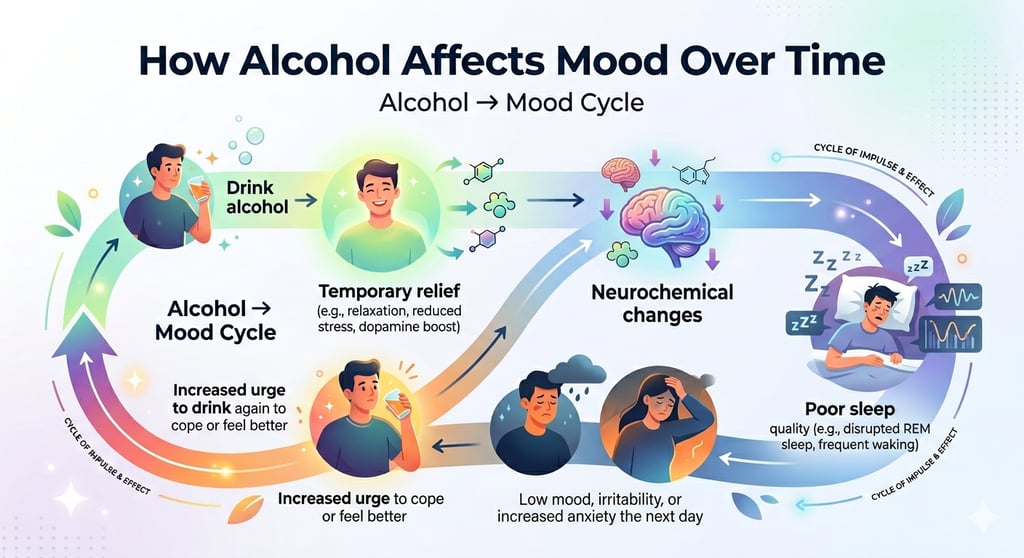
Alcohol acts as a central nervous system depressant, which can create a short-term sense of relaxation or emotional relief. This can reinforce the idea that alcohol is helpful for managing distress.
However, these effects are temporary.
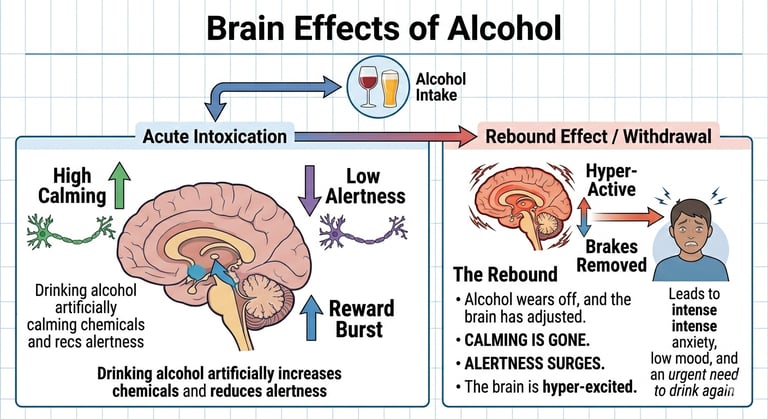
As alcohol levels fall, changes in brain chemistry—including effects on GABA, glutamate, and serotonin systems—can lead to:
increased anxiety
low mood
irritability
disrupted sleep
Over time, this can create a pattern where alcohol provides short-term relief but long-term worsening of emotional regulation.
Does Alcohol Really Help with Mood?
A large longitudinal study examining individuals with bipolar disorder found that:
Increased alcohol use was associated with worsening depressive symptoms over time
It was also linked to increased manic or hypomanic symptoms
Alcohol use predicted reduced work functioning in the future
Importantly, mood symptoms did not predict increased alcohol use later
This challenges the common assumption that people primarily drink because they feel low.
Instead, alcohol itself may act as a destabilizing factor in mood disorders.
What Research Shows About Alcohol and Mood
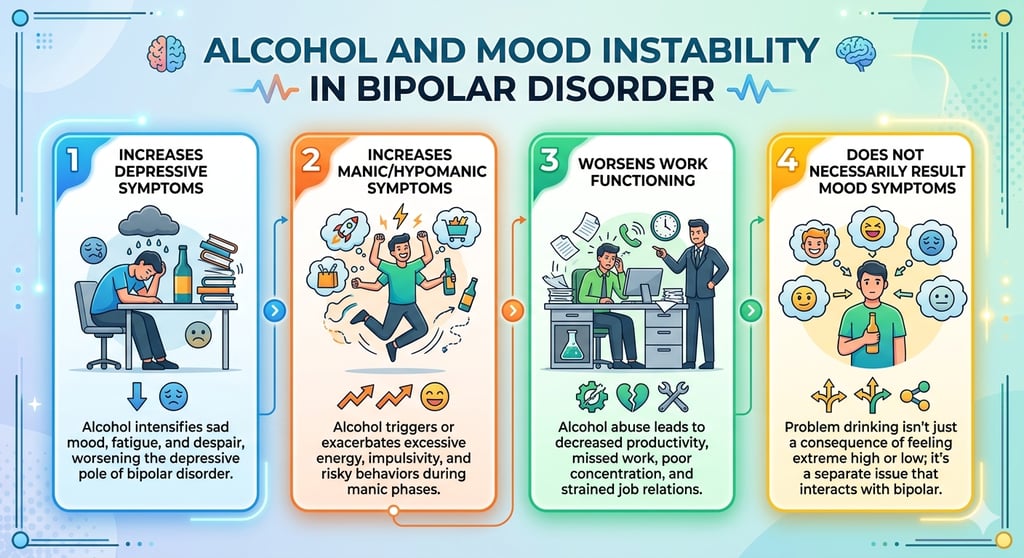
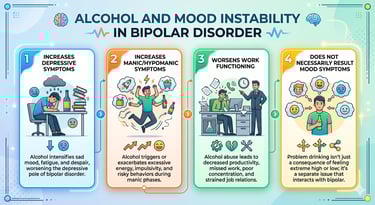
Alcohol use is particularly relevant in bipolar disorder, where mood regulation is already vulnerable.
Studies suggest that:
Nearly half of individuals with bipolar disorder may experience problematic alcohol use at some point
Alcohol use can contribute to greater mood instability
It may increase the risk of both depressive and manic episodes
Functional outcomes, especially work performance, may be affected
This means that even moderate or intermittent alcohol use can have clinical significance, not just severe dependence.
Alcohol and Bipolar Disorder
Several mechanisms may explain this relationship:
Why Alcohol May Worsen Mood
Alcohol affects multiple neurotransmitter systems involved in mood regulation, including:
GABA (inhibitory calming effect)
Glutamate (excitatory system)
Dopamine (reward pathway)
Repeated use can disrupt these systems, leading to instability in mood and emotional regulation.
Neurochemical Effects
Alcohol may initially make it easier to fall asleep, but it disrupts sleep architecture, especially REM sleep.
Poor sleep can worsen:
depression
anxiety
mood swings
Sleep Disruption
Alcohol can interfere with the body’s internal clock, which plays a key role in mood regulation—especially in bipolar disorder.
Circadian Rhythm Effects
Alcohol use may:
reduce problem-solving ability
increase impulsivity
interfere with treatment adherence
Over time, this can reinforce cycles of stress and emotional dysregulation.
Behavioural Patterns
Beyond mood symptoms, alcohol use may also affect how individuals function in daily life.
Research suggests that increased alcohol use is associated with worsening work functioning over time, even when mood symptoms are accounted for.
This may be due to:
reduced concentration
fatigue
mood variability
impaired decision-making
Alcohol and Daily Functioning
There is no one-size-fits-all answer. However, in individuals with:
depression
bipolar disorder
anxiety disorders
even moderate alcohol use may have disproportionate effects.
For some individuals, reducing or avoiding alcohol may lead to:
improved mood stability
better sleep
improved treatment response
Is Alcohol Ever Safe in Mood Disorders?
It may be helpful to review alcohol use if:
mood symptoms fluctuate frequently
sleep is disturbed
medications seem less effective
functioning at work or home is affected
Screening tools such as the AUDIT (Alcohol Use Disorders Identification Test) can help assess patterns of alcohol use.
When to Be Cautious
Alcohol may provide temporary relief, but research suggests it can worsen mood over time, especially in conditions like depression and bipolar disorder.
Studies show that increased alcohol use is associated with later increases in depressive and manic symptoms, along with reduced functioning. Rather than simply being a coping mechanism, alcohol may contribute to ongoing mood instability.
Quick Answer: Does Alcohol Worsen Mood?
Common Questions About Alcohol and Mood
Does alcohol make depression worse?
Yes. While alcohol may briefly reduce distress, it can lead to worsening low mood, fatigue, and sleep problems over time. Regular use is linked to increased severity of depressive symptoms.
Can alcohol trigger bipolar episodes?
Alcohol may increase the risk of both depressive and manic or hypomanic episodes in individuals with bipolar disorder. It can disrupt sleep, circadian rhythms, and emotional regulation.
Do people drink because they feel depressed?
Sometimes, but research suggests the relationship is not one-directional. Alcohol is often used to cope, but it may also contribute to worsening mood symptoms over time, rather than simply resulting from them.
Is it safe to drink if I have anxiety or depression?
Even moderate alcohol use may have stronger effects in individuals with mental health conditions. It may worsen symptoms, interfere with sleep, and reduce treatment effectiveness.
If you are experiencing changes in mood, sleep, or alcohol use, brief screening tools can help you better understand your symptoms and decide when to seek professional help.
These tools are not diagnostic, but they can provide useful insights into patterns that may need attention.
Screening and Self-Assessment
Professional evaluation may be helpful if:
alcohol use is increasing over time
mood symptoms are worsening despite treatment
there are cycles of relief followed by worsening mood
alcohol is being used regularly to cope with distress
An integrated approach addressing both mood symptoms and alcohol use is often most effective.
When to Seek Professional Help
Reviewed by Dr. Mahendra Singh Uikey, MBBS, MD Psychiatry (AIIMS Delhi)
Consultant Psychiatrist | AIIMS-trained
Providing evidence-based psychiatric care
This article is for educational purposes and does not replace professional medical advice.
Contact
Reach out for support and appointments
care@psyconnect.in
©2026. All rights reserved.
Confidential. Evidence-based. Ethical psychiatric practice.
If you are in crisis or having thoughts of self-harm or suicide, please reach out right away. Support is free, confidential, and available 24/7.
Tele-MANAS (Government of India): 14416 or 1-800-891-4416 — available in English and 20 regional languages
ICall (TISS): 9152987821 — counselling support by trained professionals
AASRA: 9820466726 — 24/7 crisis support
Emergency: Contact your nearest hospital or call 112
IMMEDIATE SUPPORT
+91 82877 12625 (Reception)