
Bipolar Affective Disorder (BPAD): Symptoms, Causes, and Treatment
Bipolar Affective disorder is a mental health condition characterized by significant changes in mood, energy levels, activity, and behaviour. These mood changes typically occur as episodes of mania, hypomania, and depression, and may affect sleep, thinking, decision-making, and daily functioning.
Although mood fluctuations are a normal part of life, bipolar affective disorder involves distinct episodes that can interfere with work, relationships, and overall wellbeing.
Understanding bipolar affective disorder involves recognizing its symptoms, possible causes, and evidence-based approaches to treatment. This hub brings together educational articles, screening tools, and guidance on when professional help may be useful.
Bipolar affective disorder is a mood disorder in which individuals experience episodes of elevated mood (mania or hypomania) and depression.
These episodes reflect changes in brain systems involved in emotion regulation, motivation, reward processing, and circadian rhythms.
Mood episodes may include:
What Is Bipolar Affective Disorder?
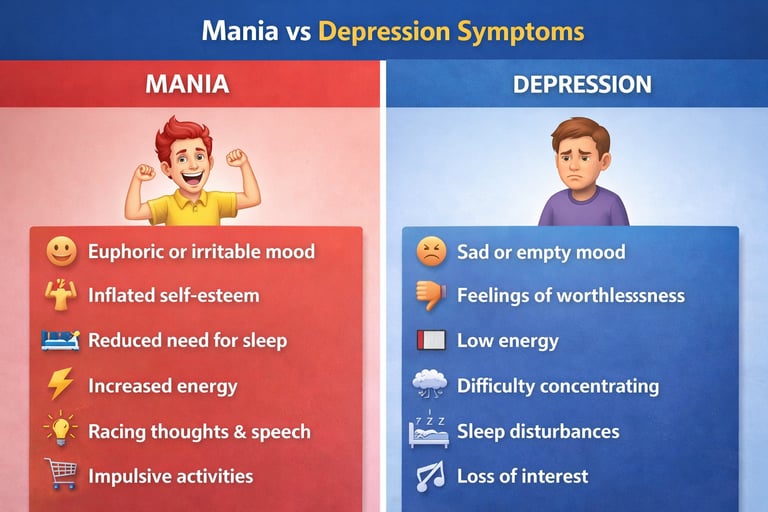
unusually elevated or irritable mood
increased energy or activity
decreased need for sleep
racing thoughts or rapid speech
increased goal-directed activity
impulsive or risky behaviour
Manic or Hypomanic Symptoms
persistent sadness or low mood
reduced motivation or pleasure
fatigue or low energy
changes in sleep or appetite
difficulty concentrating
feelings of hopelessness
The severity and duration of these episodes help determine the specific diagnosis.
If you or someone you know is experiencing thoughts of self-harm or suicide, please seek help immediately. You can contact the iCall helpline at 9152987821 or reach out to a mental health professional without delay.
Depressive Symptoms
Mental health professionals generally describe several forms of bipolar affective disorder.
Types of Bipolar Affective Disorder
Bipolar I disorder involves at least one manic episode, which may require hospitalization or cause significant impairment in functioning. Depressive episodes commonly occur but are not required for diagnosis.
Bipolar I Disorder
Bipolar II disorder involves recurrent depressive episodes and hypomania, a milder form of elevated mood that does not cause the severe impairment or hospitalisation seen in mania. However, Bipolar II is not a "milder" illness overall — the depressive episodes are often more frequent, longer-lasting, and more disabling than the hypomanic ones, and they are the main reason people seek help. Accurate diagnosis matters, because Bipolar II is frequently mistaken for ordinary depression.
Bipolar II Disorder
Cyclothymic disorder involves long-term mood instability, with numerous periods of mild hypomanic symptoms and mild depressive symptoms that do not meet full criteria for major mood episodes.
Cyclothymic Disorder
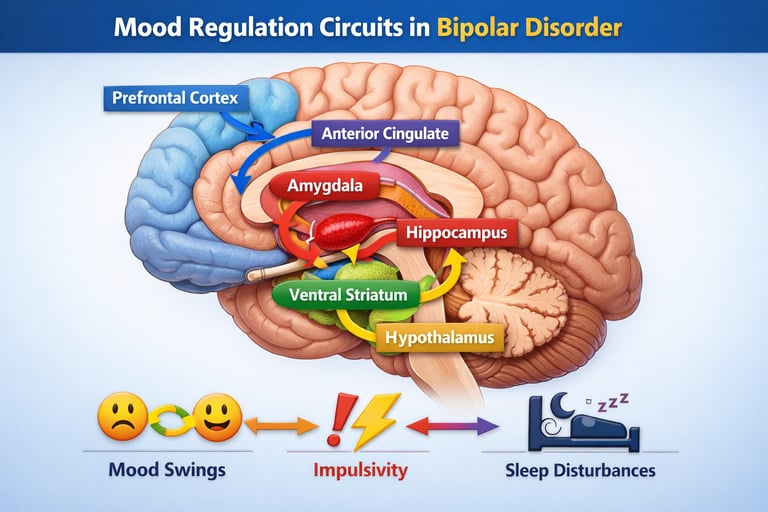
Bipolar affective disorder is associated with differences in brain systems that regulate mood, motivation, and emotional processing.
How Bipolar Affective Disorder Affects the Brain?
Key brain regions involved include:
Prefrontal cortex – decision-making and impulse control
Amygdala – emotional processing
Hippocampus – memory and emotional context
Reward circuits involving dopamine pathways
Research suggests that bipolar affective disorder may involve changes in neurotransmitter activity, including dopamine, serotonin, and glutamate.
Circadian rhythm regulation also plays an important role, which explains why sleep disruption can trigger mood episodes in vulnerable individuals.
Mood episodes may sometimes occur without an obvious trigger, but several factors are known to increase vulnerability.
Common triggers include:
sleep deprivation
major life stress
irregular daily routines
substance use
changes in medication
Maintaining regular sleep patterns and daily routines is often an important part of mood stabilization.
Common Triggers of Mood Episodes
Explore our articles explaining bipolar affective disorder and related mood patterns.
Bipolar Affective Disorder Articles & Guides
Substance use and bipolar disorder frequently occur together. Alcohol and recreational drugs can destabilise mood, trigger manic or depressive episodes, interfere with sleep, and reduce the effectiveness of mood-stabilising medication. Even occasional use can disrupt the delicate mood balance that treatment works to maintain. This article explains the relationship between bipolar disorder and substance use, and why addressing both together is important for long-term stability.
Bipolar Affective Disorder and Addiction
More articles on bipolar affective disorder coming soon.
If you are experiencing significant changes in mood, energy, or sleep, a brief screening questionnaire may help identify whether mood symptoms could require further evaluation.
Self-Assessment
Mood Disorder Questionnaire (MDQ)
The Mood Disorder Questionnaire is a commonly used screening tool that helps identify patterns of manic or hypomanic symptoms.
It evaluates symptoms such as:
elevated mood
increased activity or energy
decreased need for sleep
racing thoughts
impulsive behaviour
Bipolar affective disorder is a treatable condition, and many individuals are able to achieve long-term stability with appropriate treatment.
Treatment typically includes a combination of the following approaches.
Evidence-Based Treatment Approaches
Mood stabilizers help regulate mood fluctuations and reduce the risk of manic or depressive episodes.
Commonly used medications include:
lithium
valproate
lamotrigine
certain atypical antipsychotics
Medication decisions are individualized and guided by clinical evaluation.
Mood Stabilizing Medications
Psychotherapy can help individuals understand mood patterns, improve coping strategies, and strengthen routines that support stability.
Common therapeutic approaches include:
cognitive behavioural therapy (CBT)
interpersonal and social rhythm therapy
psychoeducation
Psychological Therapies
Maintaining consistent daily routines, especially sleep schedules, is a key component of managing bipolar affective disorder.
Helpful strategies may include:
regular sleep and wake times
structured daily activities
stress management
avoiding substance misuse
Lifestyle and Routine Stability
Professional evaluation may be helpful if you or someone you know experiences:
periods of unusually elevated mood or increased energy
decreased need for sleep with increased activity
impulsive or risky behaviour
episodes of severe depression
rapid changes in mood or energy
Early assessment can help identify mood disorders and guide effective treatment.
When to Seek Professional Help
Common Questions About Bipolar Affective Disorder
Is bipolar affective disorder the same as mood swings?
No. Everyday mood changes are normal. Bipolar affective disorder involves distinct mood episodes that last days to weeks and significantly affect functioning.
Can bipolar affective disorder be treated?
Yes. With appropriate treatment and monitoring, many individuals with bipolar affective disorder are able to manage symptoms and maintain stable functioning.
Why is sleep important in bipolar affective disorder?
Sleep disruption can destabilize mood regulation systems and may trigger manic or depressive episodes in vulnerable individuals.
What is the difference between Bipolar I and Bipolar II?
Bipolar I involves at least one full manic episode, which can be severe and may require hospitalisation. Bipolar II involves hypomania (a milder form of elevated mood) together with major depressive episodes, but no full mania. The depressive episodes in Bipolar II are often the most prominent feature.
Is bipolar affective disorder genetic?
Genetics play a significant role. Having a close family member with bipolar disorder increases the risk, though environmental factors such as stress, trauma, and sleep disruption also contribute.
Why is bipolar disorder often misdiagnosed as depression?
People usually seek help during a depressive episode and may not recognise or report earlier periods of elevated mood or energy. Because of this, bipolar disorder is frequently mistaken for depression. A detailed history of past mood episodes helps make an accurate diagnosis.
Do people with bipolar disorder need medication for life?
Many individuals benefit from long-term medication to maintain mood stability and prevent relapse. The type and duration of treatment are decided individually with a psychiatrist, based on episode history and response to treatment.
Can someone with bipolar disorder live a normal life?
Yes. With consistent treatment, regular follow-up, and good lifestyle management — particularly stable sleep and routines — most people with bipolar disorder lead stable, productive, and fulfilling lives.
Is online psychiatric consultation suitable for bipolar disorder?
Online consultation can be effective for assessment, ongoing management, and follow-up. However, severe episodes — particularly acute mania — may require in-person or urgent care.
Reviewed by Dr. Mahendra Singh Uikey, MBBS, MD Psychiatry (AIIMS Delhi)
Consultant Psychiatrist | AIIMS-trained
Providing evidence-based psychiatric care
You may also find these resources helpful:
Explore Related Mental Health Topics
Contact
Reach out for support and appointments
care@psyconnect.in
©2026. All rights reserved.
Confidential. Evidence-based. Ethical psychiatric practice.
If you are in crisis or having thoughts of self-harm or suicide, please reach out right away. Support is free, confidential, and available 24/7.
Tele-MANAS (Government of India): 14416 or 1-800-891-4416 — available in English and 20 regional languages
ICall (TISS): 9152987821 — counselling support by trained professionals
AASRA: 9820466726 — 24/7 crisis support
Emergency: Contact your nearest hospital or call 112
IMMEDIATE SUPPORT
+91 82877 12625 (Reception)