
Depression vs Burnout: How to Tell the Difference
Depression and burnout can feel similar but require different support. Learn key differences, symptoms, and when to seek professional help.
DEPRESSION
Feeling emotionally exhausted, unmotivated, and mentally drained has become increasingly common in modern work culture. Many professionals describe feeling “burnt out,” while others wonder if they might be experiencing depression.
Although burnout and depression can appear similar, they are not the same condition — and understanding the difference is important for choosing the right kind of support.
What Is Burnout?
Burnout is a state of chronic workplace-related stress that has not been successfully managed. It is commonly associated with prolonged job pressure, lack of control, excessive workload, and emotional exhaustion.
Burnout typically affects:
Working professionals
Caregivers
Healthcare workers
High-responsibility roles
Common features include:
Emotional exhaustion
Reduced motivation at work
Cynicism or detachment from professional roles
Feeling ineffective or unproductive
Importantly, burnout is context-specific — symptoms often improve with rest, time off, or changes in work environment.
What Is Depression?
Depression is a clinical mental health condition that affects mood, thinking, behavior, sleep, energy, and overall functioning. Unlike burnout, depression is not limited to work-related stress and often persists across multiple areas of life.
Depression may involve:
Persistent low mood or emotional numbness
Loss of interest or pleasure (even outside work)
Sleep and appetite changes
Difficulty concentrating
Feelings of hopelessness or excessive guilt
Symptoms typically last at least two weeks and interfere with daily functioning.
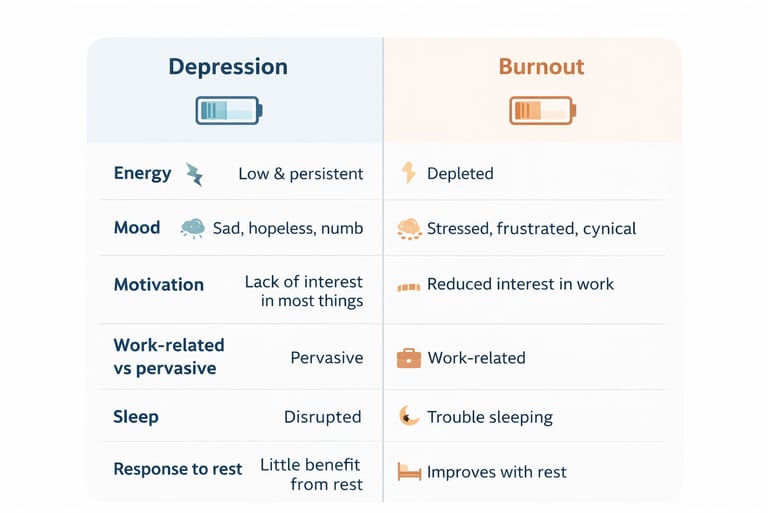
Key Differences Between Burnout and Depression
Understanding these differences can help clarify what you may be experiencing:
Cause
Burnout: Primarily related to chronic work stress
Depression: Multifactorial (biological, psychological, social)
Scope of symptoms
Burnout: Mostly work-related
Depression: Affects work, relationships, and personal life
Mood pattern
Burnout: Irritability, frustration, emotional exhaustion
Depression: Persistent low mood, emptiness, or hopelessness
Response to rest
Burnout: Often improves with time off
Depression: Symptoms persist despite rest
Motivation
Burnout: Motivation may return outside work
Depression: Reduced motivation across activities
Treatment approach
Burnout: Stress management, boundaries, workplace changes
Depression: Often requires structured mental health care
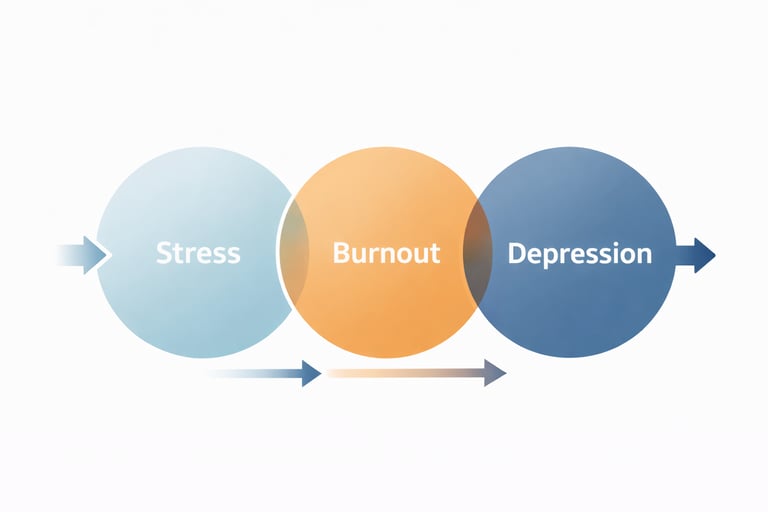
Can Burnout Turn Into Depression?
Yes — prolonged, untreated burnout can increase the risk of developing depression.
Chronic stress, sleep deprivation, and emotional exhaustion may eventually overwhelm coping mechanisms, leading to depressive symptoms that no longer resolve with rest alone.
Early recognition is key.
Screening and Self-Assessment
If symptoms such as low mood, fatigue, poor concentration, or loss of interest persist, a structured screening tool can help assess severity.
Screening does not replace professional evaluation but helps guide next steps.
When to Seek Professional Help
You may consider seeking professional evaluation if:
Symptoms persist beyond two weeks
Emotional distress affects work performance or relationships
Fatigue and low mood continue despite time off
You feel increasingly overwhelmed or hopeless
Early support often prevents worsening outcomes.
Workplace-Focused Treatment Approach
Management depends on the underlying cause and may include:
Stress and workload restructuring
Psychotherapy
Medication (when indicated)
Sleep and lifestyle regulation
A personalized psychiatric assessment helps determine the most appropriate plan.
Related Resource:
Learn more about depression and mental health assessment on our website.
Link:
👉 Depression and Mental Health
Reviewed by Dr. Mahendra Singh Uikey, MBBS, MD Psychiatry (AIIMS Delhi)
Consultant Psychiatrist | AIIMS-trained
Providing evidence-based psychiatric care
If emotional exhaustion or low mood is affecting your professional life, you may consider discussing your concerns during a confidential psychiatric consultation.
Contact
Reach out for support and appointments
care@psyconnect.in
©2026. All rights reserved.
Confidential. Evidence-based. Ethical psychiatric practice.
If you are in crisis or having thoughts of self-harm or suicide, please reach out right away. Support is free, confidential, and available 24/7.
Tele-MANAS (Government of India): 14416 or 1-800-891-4416 — available in English and 20 regional languages
ICall (TISS): 9152987821 — counselling support by trained professionals
AASRA: 9820466726 — 24/7 crisis support
Emergency: Contact your nearest hospital or call 112
IMMEDIATE SUPPORT
+91 82877 12625 (Reception)