
Exam Result Anxiety: When Stress Becomes a Mental Health Concern
Board results, NEET, and competitive exam season bring stress for millions of Indian students. A psychiatrist explains when normal worry needs professional support.
PUBLIC MENTAL HEALTH
Every result season — board exams, NEET, competitive entrance tests — brings a predictable wave of stress across Indian households. Some anxiety before checking a result is completely normal. But for a significant number of students, that stress doesn't end when the result is out. It lingers, intensifies, or shows up in ways that affect sleep, appetite, and daily functioning.
A psychiatrist explains what separates ordinary exam-season nerves from something that may need professional attention.
Exam Result Anxiety: When Stress Becomes a Mental Health Concern
Academic performance in India is often tied tightly to family expectations, career pathways, and social comparison. A single result can feel like it determines an entire future — medical college seats, engineering admissions, government job eligibility. That pressure is real, and it's not a personal weakness to feel it intensely.
The problem isn't the stress itself. It's when that stress stops being situational and starts looking like a pattern.
Why Result Season Hits Differently in India
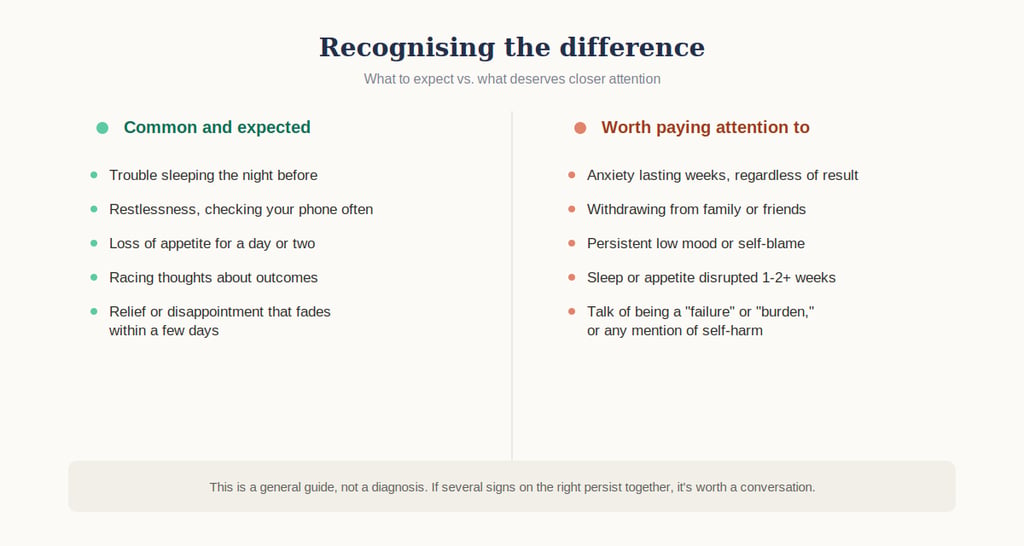
Common and expected:
Trouble sleeping the night before a result
Restlessness, checking phone repeatedly
Loss of appetite for a day or two
Racing thoughts about outcomes
Relief or disappointment that fades within days
Worth paying attention to:
Anxiety that continues for weeks regardless of the actual result
Avoiding people, withdrawing from family or friends
Persistent low mood, hopelessness, or excessive self-blame after a poor result
Sleep or appetite disruption lasting more than 1-2 weeks
Talk of being a "failure" or a "burden," or any hint of self-harm
Physical symptoms — chest tightness, panic-like episodes, constant fatigue
If several of these are present together and persisting, it's a signal — not proof of a diagnosis, but a reason to check in more closely.
Normal Pre-Result Stress vs. Something More
Separate the result from the child's worth. This sounds obvious but is the single most protective thing a parent can say and mean.
Watch behaviour, not just words. Students under distress often say "I'm fine" while withdrawing, sleeping poorly, or losing interest in things they normally enjoy.
Avoid comparison — with siblings, cousins, or peers — especially in the days immediately after a result.
Ask directly and calmly if a child seems persistently low: "How are you really feeling about this?" Direct, non-judgmental questions open doors that indirect ones don't.
What Parents Can Do
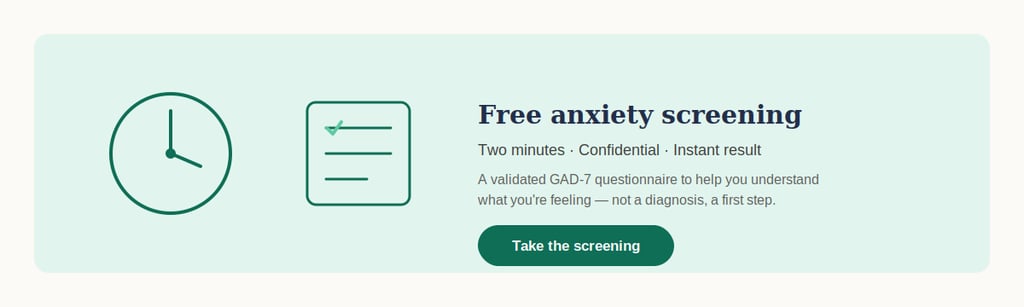
A screening tool isn't a diagnosis, but it can help put a name to what someone is feeling and whether it's time to talk to a professional. Our free, confidential GAD-7 anxiety screening tool takes about two minutes and gives an instant score-based result.
A Simple First Step: Screening

Consider a consultation if anxiety or low mood around academic performance:
Has lasted more than two weeks
Is affecting sleep, appetite, or ability to function day-to-day
Comes with thoughts of self-harm, hopelessness, or being a burden
Isn't improving despite reassurance from family
A psychiatric consultation at this stage isn't about "labelling" a student — it's about getting an accurate picture of what's going on and the right support to move forward.
When to Seek Professional Help
If you or someone you know is having thoughts of self-harm or suicide, please reach out right away:
Tele-MANAS: 14416 or 1-800-891-4416
iCall: 9152987821
AASRA: 9820466726
If You Need Immediate Support
Frequently Asked Questions
Is it normal to feel anxious before a result?
Yes. Mild to moderate anxiety before checking any important result is a normal stress response, not a disorder. It typically fades within a few days once the result is known.
My child got a poor result and hasn't left their room in days. What should I do?
Persistent withdrawal lasting several days is worth taking seriously. Start with a calm, direct conversation. If withdrawal continues alongside low mood, sleep changes, or loss of interest in usual activities, consider a screening or professional consultation.
Can exam stress cause long-term anxiety?
For most people, exam-related anxiety resolves once the stressor passes. In some cases, unaddressed academic stress can contribute to a broader anxiety pattern, especially if it recurs every exam cycle. Ongoing or recurring stress is a reason to seek an evaluation.
Is online screening reliable?
Tools like the GAD-7 are validated screening instruments used by clinicians worldwide. They don't replace a diagnosis, but they're a reliable, evidence-based first step to understand whether symptoms warrant professional follow-up.
Contact
Reach out for support and appointments
care@psyconnect.in
©2026. All rights reserved.
Confidential. Evidence-based. Ethical psychiatric practice.
If you are in crisis or having thoughts of self-harm or suicide, please reach out right away. Support is free, confidential, and available 24/7.
Tele-MANAS (Government of India): 14416 or 1-800-891-4416 — available in English and 20 regional languages
ICall (TISS): 9152987821 — counselling support by trained professionals
AASRA: 9820466726 — 24/7 crisis support
Emergency: Contact your nearest hospital or call 112
IMMEDIATE SUPPORT
+91 82877 12625 (Reception)